Selling across state lines can make sales tax feel messy in a hurry. A company does not need a shop, warehouse, office, or employee in a state for questions to start. Sometimes the sales themselves are enough to put the business on that state’s radar.
So, what is the meaning of economic nexus?
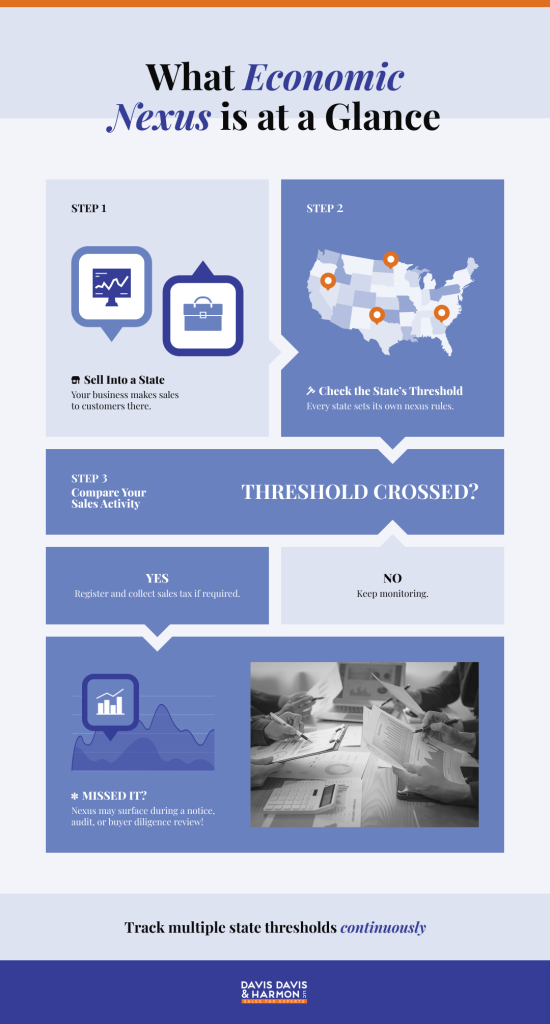
In plain terms, economic nexus is the connection a business creates with a state through sales activity. Most states measure economic nexus thresholds by revenue, and a few still look at transaction volume too. Once the business crosses that state’s line, it may need to answer the practical question of what is economic nexus along with register, collect sales tax, file returns, and send the tax in even without a physical footprint there.
That is the understanding of economic nexus most business owners need to grasp first. Selling can be enough.

Why Economic Nexus Confuses So Many Businesses
For years, business owners tended to ask physical questions first. Do we have a store there? Inventory? Employees? A sales rep? Those facts still matter. But after the 2018 South Dakota v. Wayfair decision, states gained much more room to enforce sales tax rules based on economic activity. That is where “what is economic nexus” becomes a real business question, not just a technical phrase.
That means a business can create sales tax exposure simply by selling into a state.
Common Points of Confusion
- Selling online without having a physical location in the customer’s state
- Crossing a dollar threshold without realizing it
- Tracking economic nexus thresholds by state as rules change
- Assuming marketplace sales solve every sales tax issue
- Confusing the meaning of economic nexus for sales tax nexus
- Waiting until a sales tax audit notice arrives to review exposure
Some states once used a two-prong test that looked at both sales dollars and transaction counts, which is one reason knowing what economic nexus is can be a moving-target question. Over time, several states have moved away from transaction-count thresholds and now rely more heavily on dollar-based thresholds. The details still vary by state, though, and that is where businesses can get into trouble.
Economic Nexus Thresholds by State
Economic nexus thresholds by state are not identical. Many states use a sales-dollar threshold, often measured over the current or previous calendar year. Some rules look at gross sales. Others may apply to taxable sales, retail sales, or a more specific category of activity. A few states still include transaction counts, which is why knowing what economic nexus is in practice can deserve a closer look.
Tedious? Absolutely.
That is why multi-state sellers should be careful about relying on their memory of economic nexus’s meaning, old spreadsheets, or a quick guess from last year’s numbers. A business can be below economic nexus threshold by one state and already over it in another. It can also cross a threshold mid-year, which raises timing questions around registration and collection.
What a Practical Review Includes
- Which states are customers buying from?
- What revenue is going into each state?
- Are sales direct, marketplace-based, or a mix of both?
- Are any states close to threshold?
- Did products, services, or sales channels change recently?
- Has anyone reviewed what economic nexus exposure is and means for those changes?
- Who on the team actually monitors this?
That final question is easy to brush past. But if no one owns the process, economic nexus can become the kind of issue that sits quietly until it is expensive.
Physical Nexus Still Counts
Economic nexus did not erase physical nexus. It just added another layer.
Employees, contractors, inventory, equipment, trade shows, installations, deliveries, and other in-state activity can still create physical nexus. Remote work can complicate things too, especially when employees relocate or work from states where the company has never registered.
So the question is not only, “what is economic nexus?” A better question is, “What facts could create nexus for this business?”
That is where sales tax gets messy. One company might have economic nexus because of revenue. Another might have physical nexus because of inventory stored in a third-party warehouse. A third might have both.
What Happens if You Cross a Threshold?
The meaning of economic nexus varies state-to-state. Crossing an economic nexus threshold by a state’s rules does not automatically mean the situation is beyond repair. It does mean the business should take the issue seriously.
Depending on the state and the facts, next steps may include:
- Reviewing when the threshold was crossed and what economic nexus exposure is for that state
- Checking whether registration is required
- Evaluating prior-period exposure
- Looking at marketplace facilitator activity
- Considering remediation or voluntary disclosure options
- Setting up a process to monitor thresholds going forward
Results that Speak for Themselves
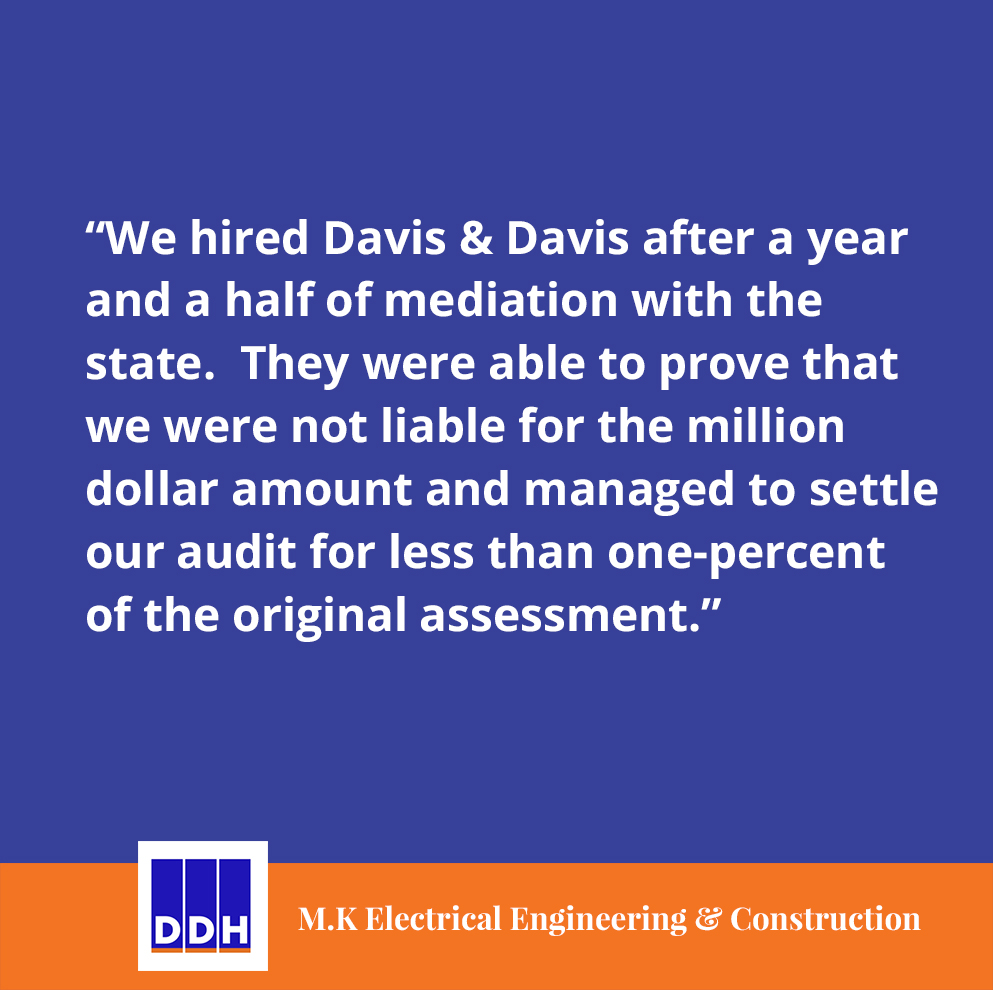
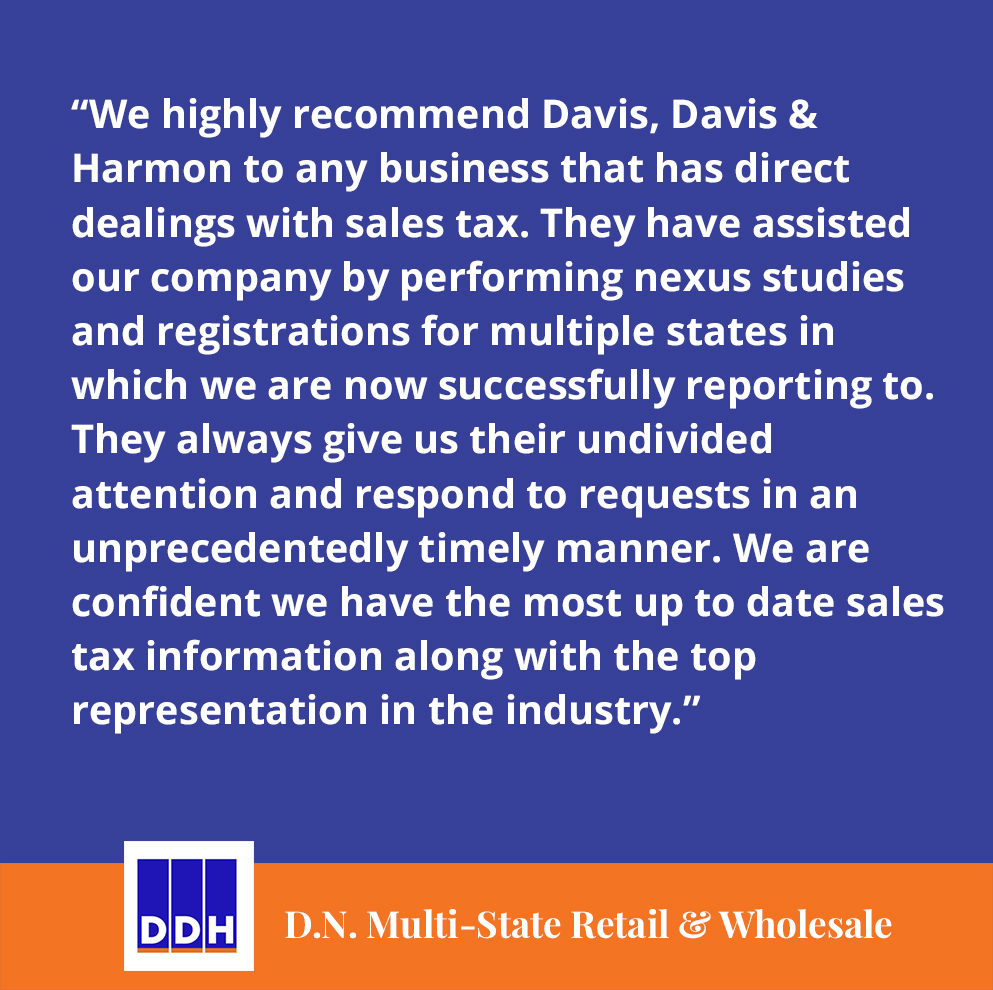
Davis Davis & Harmon LLC – The Sales Tax Experts works with businesses nationwide on sales and use tax questions, including issues tied to nexus analysis, multi-state activity, audits, registration, compliance gaps, and exposure. Since 2001, DDH has focused on sales tax work, with senior tax professionals who understand state and local tax issues from the inside.
Schedule a Call With DDH
If the rules around economic nexus feel unclear, you do not have to answer “what is economic nexus?” alone. Call 972-488-5000 or fill out the contact form to schedule a free intro call with a DDH sales tax expert.